Overhead Crane Inverter: Drive Selection, Brake Setup & Braking Resistor Guide

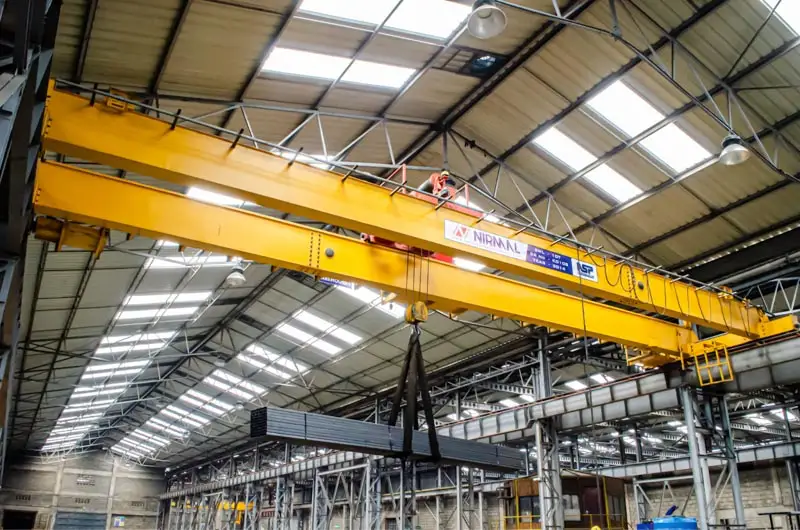
How Does an Overhead Crane Inverter Control the Motor and Load Movement?
When selecting an inverter for an overhead crane, motor power in kilowatts should not be the only factor considered. The motor’s rated current, the crane motion being controlled, low-speed torque requirements, mechanical brake operation, start-stop frequency, and regenerative energy all affect proper drive selection.
The requirements of a hoist motor are different from those of bridge and trolley motors. In a hoist, the load is suspended vertically, so torque control and brake coordination become more critical. For bridge and trolley travel, smooth acceleration, controlled deceleration, inertia management, and reduced mechanical shock are usually the main priorities.
This guide explains what matters when selecting an overhead crane inverter, how the requirements differ between the hoist, bridge, and trolley, when a braking resistor may be required, and what should be checked when common drive faults occur.
What Is an Overhead Crane Inverter and What Does It Do?
An inverter, also known as a variable-frequency drive (VFD), controls the frequency and voltage supplied to the electric motor. This allows the drive to regulate motor speed, acceleration, and deceleration.
In an overhead crane, this provides several practical benefits:
- Smoother motor starting instead of abrupt acceleration
- Adjustable load travel speed
- Smoother bridge and trolley stopping
- Reduced mechanical shock on the motor, gearbox, and crane structure
- Better motor control at low speeds
- Better coordination between the motor and mechanical brake
For this reason, an inverter in a crane system is not used only for speed control. The quality of crane movement depends heavily on correct drive selection and proper parameter settings.
What Type of Inverter Is Suitable for an Overhead Crane?
The first step is to determine which crane motion the drive will control. The requirements of the hoist, bridge, and trolley are not the same.
| Crane Section | Main Drive Requirements |
|---|---|
| Hoist | Stable low-speed torque, brake control, and regenerative energy management |
| Bridge | Smooth acceleration, inertia control, and controlled stopping |
| Trolley | Smooth speed control, controlled direction changes, and accurate stopping |
What Matters Most for a Hoist?
A hoist motor must operate reliably while carrying a load, including at low speeds. Therefore, the following factors should be checked:
- Motor rated current
- Low-speed torque requirements
- Motor control mode
- Mechanical brake operation
- Encoder requirements
- Braking resistor requirements
What Matters Most for Bridge and Trolley Travel?
For bridge and trolley movement, the main concerns are usually smooth starting and stopping, inertia control, and avoiding sudden mechanical shock.
Acceleration time, deceleration time, number of starts and stops, direction changes, and actual motor current should all be considered when selecting and setting up the drive.
Is Motor Power Alone Enough to Select the Inverter?
No.
Motor power is only one selection criterion. Motor rated current, type of crane motion, number of motors, duty cycle, and load conditions must also be considered.
If two motors are operated simultaneously by one drive, the combined motor current must be included when sizing the inverter.
Why Shouldn’t an Overhead Crane Inverter Be Selected by Kilowatts Alone?
Suppose the motor nameplate shows 7.5 kW. This is useful information, but it is not enough for final drive selection.
Two 7.5 kW motors can have different rated currents, duty cycles, applications, and load conditions.
At minimum, the following information should be checked:
- Motor power
- Motor rated current
- Motor voltage
- Supply voltage
- Whether the motor operates the hoist, bridge, or trolley
- Load weight and operating conditions
- Number of operating cycles per hour
- Required acceleration and deceleration times
- Mechanical brake type
- Presence or absence of an encoder
- Ambient temperature and installation conditions
The drive must be able to supply the current required by the motor during acceleration under load, and the motor current must remain within the permissible output current range of the inverter.
Which Is More Important: Kilowatts or Amps?
Both are important, but after motor power has been identified, motor rated current becomes one of the most important criteria for choosing the final inverter model.
A drive may appear suitable based on its kW rating but still be undersized if its output current capacity is lower than the motor requires during starting, acceleration, or loaded operation.
Should You Always Select an Inverter One Size Larger for a Crane?
No.
The common rule that a crane always requires an inverter one size larger than the motor is not universally correct.
In some applications, motor current, load conditions, or duty cycle may justify selecting a larger drive. However, this decision should be based on actual operating data rather than a general rule.
If the motor rated current exceeds the output current capacity of the selected drive, or the application requires higher current during acceleration, a higher-capacity model should be evaluated.
The correct approach is to compare the motor nameplate data with the drive’s rated output current instead of automatically oversizing the inverter.
XIMA L-Series Three-Phase Inverter Selection Table
XIMA L-Series three-phase drives for crane and lifting applications are available from 1.5 kW to 30 kW.
The following table can be used for initial model selection:
| Drive Model | Rated Power | Rated Output Current |
|---|---|---|
| L100B015-3 | 1.5 kW | 5 A |
| L100B022-3 | 2.2 kW | 7 A |
| L100B030-3 | 3 kW | 9 A |
| L100B040-3 | 4 kW | 10 A |
| L100B055-3 | 5.5 kW | 13 A |
| L200C075-3 | 7.5 kW | 19 A |
| L200C110-3 | 11 kW | 26 A |
| L200C150-3 | 15 kW | 36 A |
| L300D185-3 | 18.5 kW | 40 A |
| L300D220-3 | 22 kW | 47 A |
| L300D300-3 | 30 kW | 63 A |
This table is useful for initial comparison, but final drive selection must still be based on actual motor current and crane operating conditions.
Can an Overhead Crane Inverter Operate from a Single-Phase Supply?
Yes, for compatible motor ratings.
The L Series includes models with a 220 V single-phase input and 220 V three-phase output in 1.5, 2.2, and 3 kW ratings.
| Drive Model | Rated Power | Rated Output Current |
|---|---|---|
| L100B015-1 | 1.5 kW | 9 A |
| L100B022-1 | 2.2 kW | 11 A |
| L100B030-1 | 3 kW | 16.5 A |
The important point is that these models provide a three-phase 220 V output, not 380 V.
Motor voltage, winding connection, and rated current must therefore be compatible with the inverter output before installation.
What Is the Difference Between a Hoist Inverter and a Bridge Travel Inverter?
The main difference is the nature of the load.
For bridge and trolley travel, the primary issue is usually inertia. A heavy moving structure must accelerate smoothly and stop in a controlled manner.
A hoist operates under different conditions because gravity continuously acts on the suspended load.
During lifting, the motor must generate enough torque to raise the load. During lowering, the load may drive the motor instead, causing energy to flow back toward the drive.
For this reason, hoist applications require greater attention to:
- Low-speed motor torque
- Mechanical brake operation
- Brake release timing
- Brake engagement timing
- Low-speed control
- Regenerative energy
- Braking resistor requirements
- Encoder feedback where required
Why Is Low-Speed Torque Important in Crane Applications?
Consider a suspended load that must begin moving upward from a standstill.
At the beginning of movement, motor speed is very low, but the motor must still generate enough torque to control and lift the load.
If motor control is weak in this operating region, the movement may become unstable, delayed, or jerky.
For this reason, maximum motor speed is not the only consideration when selecting an overhead crane inverter. Motor behavior during the first moments of movement is equally important.
For the L Series, the specified starting torque is up to 150% of rated torque at 0.5 Hz.
What Is Vector Control Used for in an Overhead Crane?
Vector control allows the drive to manage motor torque more precisely.
This becomes especially important when the motor must operate under load at low speed.
Bridge travel may have different control requirements, but in hoisting applications, stable low-speed torque can play an important role in smooth load movement.
The L Series supports both Sensorless Vector Control and Closed-Loop Vector Control.
Open-Loop or Closed-Loop Control: Which Is Better?
There is no single answer for every crane.
When Is Open-Loop Control Suitable?
In open-loop operation, the drive controls the motor without receiving direct speed feedback from an encoder.
For many standard bridge and trolley applications, and some hoist applications, correctly configured open-loop control can provide the required performance.
When Should Closed-Loop Control Be Considered?
Closed-loop control uses encoder feedback and may be useful when the application requires:
- Very low-speed movement
- More precise speed control
- More demanding operating conditions
- Direct motor-speed feedback
The L Series supports induction motors without encoder feedback as well as motors using encoder feedback. PG cards are also available for closed-loop applications depending on the encoder type.
Does Every Overhead Crane Need an Encoder?
No.
An encoder is not automatically required simply because the application is an overhead crane.
The need for encoder feedback depends on the crane axis, required accuracy, motor control method, and low-speed performance requirements.
Open-loop operation may be suitable for less demanding applications. As the required level of low-speed control and feedback accuracy increases, closed-loop operation becomes more relevant.
What Should Be Considered When Using an Encoder?
Electrical noise is one of the common issues that can affect encoder-feedback systems.
For proper encoder wiring:
- Keep encoder cables away from power cables.
- Use shielded cable.
- Keep the encoder cable as short as practical.
- Match the encoder type with the correct PG card and wiring configuration.
These precautions are especially important in crane control panels, where motors, inverters, contactors, and power cables may all generate electrical interference.
How Does the Mechanical Brake Work with the Inverter?
The inverter and mechanical brake perform different functions, but in a hoist they must be carefully coordinated.
The inverter does not replace the mechanical brake.
During starting, the motor must first be capable of controlling the load before the mechanical brake is released.
During stopping, motor speed should first be reduced in a controlled manner before the brake engages at the appropriate point.
What Is the Correct Brake Release Sequence?
The general operating sequence is:
Run command → Motor develops torque → Mechanical brake releases → Load begins moving
If the brake releases before the motor is ready to generate sufficient torque, unintended load movement may occur.
The L Series includes parameters and control logic for brake-release timing.
Why Does the Load Move Slightly When the Brake Releases?
If the motor has not developed sufficient torque when the mechanical brake releases, the load may move briefly.
When this happens, the entire motor-drive-brake system should be checked rather than changing a single parameter.
Items to inspect include:
- Motor data
- Motor tuning
- Open-loop or closed-loop operating mode
- Encoder operation
- Mechanical brake condition
- Brake command timing
- Drive current capacity
Changing parameters randomly without identifying the actual cause is not a reliable troubleshooting method.
Can an Inverter Replace the Mechanical Brake?
No.
The inverter controls the motor, while the mechanical brake performs a separate function in the hoisting system.
The hoist should be designed so that its mechanical and safety systems can perform their required functions during stopping, drive faults, or loss of power.
Removing the mechanical brake simply because an inverter is installed is not an appropriate design approach.
What Is a Braking Resistor in an Overhead Crane Inverter System?
When a heavy load is lowered, the motor does not always operate only as an energy consumer.
The suspended load can drive the motor, causing energy to flow back into the drive’s DC bus.
If this energy is not properly managed, DC-bus voltage can rise.
A braking resistor allows this electrical energy to be dissipated as heat.
The L Series supports dynamic braking and the connection of an external braking resistor.
Does Every Overhead Crane Need a Braking Resistor?
No.
The need for a braking resistor depends on the actual operating conditions.
Factors affecting regenerative energy include:
- Load weight
- Travel or lowering speed
- Number of lowering cycles
- Deceleration time
- Duty cycle
- Crane axis
- Mechanical inertia
Regenerative energy is particularly important in hoisting applications, although heavy horizontal movements with rapid deceleration may also return significant energy to the drive.
How Do You Select a Braking Resistor for a Crane?
Two main specifications must be considered.
Braking Resistor Resistance
The resistance value must remain within the permitted range of the drive’s braking circuit.
Using an inappropriate resistance value can cause braking-circuit current to exceed its design limits.
Braking Resistor Power Rating
The resistor power rating determines how much thermal energy the component can safely dissipate.
This is directly related to operating duty.
A crane that performs only a few short movements per hour does not have the same braking resistor requirements as a crane that continuously raises and lowers loads.
In the L Series technical table, the recommended resistor power values are based on 10% regenerative energy. If an application produces more regenerative energy, the resistor power rating must be increased accordingly, while the permissible resistance range for that drive model remains unchanged.
Where Is the Braking Resistor Connected on the L Series?
On the L Series, the braking resistor is connected to terminals B+ and B-.
The resistance value, power rating, and wiring method must be selected according to the exact drive model.
Incorrect resistor selection or wiring can damage the equipment and generate excessive heat, so power-circuit and braking resistor installation should be performed by qualified personnel.
Why Does the Inverter Trip on Overvoltage While Lowering a Load?
One possible cause is regenerative energy returning from the motor to the DC bus.
However, regeneration is not the only possible cause of an overvoltage fault.
Items to check include:
- Excessive input voltage
- Supply-voltage fluctuations
- Incorrect acceleration or deceleration settings
- Missing or improperly functioning braking resistor
- Incorrect braking resistor selection
If an overvoltage fault occurs, replacing the drive or changing parameters at random is not an appropriate first step. The actual cause of the DC-bus voltage rise should be identified systematically.
Why Does a Crane Inverter Trip on Overcurrent During Starting?
If an overcurrent fault occurs during acceleration, the following conditions should be checked:
- Acceleration time is too short
- Mechanical load is too high
- Motor fault
- Motor cable fault or short circuit
- Drive current capacity does not match the motor
- Mechanical brake is not fully releasing
If the brake remains partially engaged, the motor will require more current to move the load.
What Causes an Overload Fault in a Crane?
An overload condition occurs when the motor or drive operates above its permitted loading level for a specified period.
Possible causes include:
- Excessive mechanical load
- Undersized drive
- Extended low-speed operation under heavy load
- Acceleration or deceleration time that is too short
- Mechanical brake not fully releasing
- Incorrect motor rated-current setting
The mechanical and electrical causes should be identified before simply increasing the drive size.
What Does a Braking Resistor Overload Fault Mean?
If the amount of regenerative energy exceeds the resistor’s thermal capacity, a Brake Resistor Over Load warning may occur.
If this fault repeats, the actual crane duty cycle and braking resistor power rating should be reviewed.
Why Does the Inverter Overheat Inside the Control Panel?
Excessive drive temperature may result from one or more of the following:
- High ambient temperature
- Poor panel ventilation
- Cooling-fan failure
- Excessive load
- Dirty heat sink
- High switching frequency
- Heat-producing equipment installed too close to the drive
The L Series enclosure is rated IP20, so installation location and panel conditions are important.
Adequate ventilation and temperature control help prevent repeated thermal faults and improve system reliability.
Can an L Series Drive Be Installed Directly in the Workshop?
Because the enclosure is IP20, the installation environment must be evaluated for dust, moisture, contamination, and accidental contact.
In industrial environments, the drive should be installed in a suitable control panel or enclosure with sufficient airflow for cooling.
Proper installation is important not only for drive life. Excessive heat and contamination can also cause repeated faults and unstable operation.
Can Two Crane Motors Be Operated from One Inverter?
In some bridge travel applications, one inverter can operate two similar motors, but the system must be designed correctly.
The combined motor current must be considered when sizing the drive, and the motors must be compatible in terms of their specifications and required direction of rotation.
One application example uses two similar 2.2 kW motors with a 5.5 kW drive, with the configured motor rated current set to the combined current of both motors. The example also specifies that the motors must rotate in the same required direction.
This is an application example, not a fixed sizing rule for every two-motor crane system.
Can an Older Contactor-Controlled Crane Be Converted to Inverter Control?
In many systems, the motion-control system can be modernized.
Using an inverter for bridge and trolley movement can provide smoother motion and reduce repeated switching for direction changes.
The XIMA technical documentation also covers the use of drives for smoother longitudinal and cross-travel crane motion and reduced mechanical shock.
However, upgrading an older crane is not simply a matter of adding a drive. The following should also be inspected:
- Motor condition
- Mechanical brake
- Protective devices
- Control panel
- Command circuit
- Wiring
The entire control and mechanical system should be evaluated before conversion.
Can the Motor Output Contactor Be Opened While the Inverter Is Running?
Suddenly disconnecting the motor while the drive is supplying output current can cause faults or abnormal operation.
The motor contactor should therefore be coordinated with the drive’s Enable and command logic rather than being switched unnecessarily while current is present at the inverter output.
Can an Inverter Reduce Crane Load Sway?
Smooth acceleration and deceleration can reduce mechanical shock and some of the load movement caused by abrupt speed changes.
However, simply installing an inverter does not mean that all load sway will automatically be eliminated.
Correct acceleration settings, deceleration settings, crane speed, and operator behavior still affect load stability.
Does an Overhead Crane Inverter Reduce Energy Consumption?
A drive allows the motor to operate according to the actual motion requirements and provides control over starting current, speed, acceleration, and deceleration.
This may improve energy use in certain duty cycles, but a fixed percentage of energy savings should not be assumed for every crane.
In crane applications, the main benefits of an inverter are generally better motor control, smoother motion, adjustable speed, and reduced mechanical shock.
Can the Inverter Hold the Load if Power Is Lost?
Safe load holding should not depend only on the inverter.
In a hoist system, the mechanical brake and safety circuit must be considered independently from normal motor control.
The inverter is one part of the crane motion-control system; it is not a replacement for the mechanical safety components used to secure the suspended load.
What Features Should an Overhead Crane Inverter Have?
Instead of choosing a drive only by power rating or model name, check whether it provides the capabilities required by the application:
- Output current suitable for the motor
- Stable low-speed torque control
- Appropriate overload capacity
- Adjustable acceleration and deceleration
- Open-loop control and, where required, closed-loop control
- Encoder support where required
- Braking-resistor support
- Brake-control coordination
- Overcurrent and overload protection
- Motor tuning capability
- Technical documentation and support
For crane and lifting applications, the drive should be selected according to actual motor and load requirements rather than by nominal motor power alone.
XIMA L-Series inverters are designed for crane and lifting applications and include features such as vector control, open-loop and closed-loop operation, autotuning, low-speed torque control, encoder support, and dynamic braking.
What Information Should You Prepare Before Selecting an Overhead Crane Inverter?
For accurate drive selection, prepare the following information:
- A clear photo of the motor nameplate
- Motor power
- Motor rated current
- Motor voltage
- Available supply voltage
- Whether the motor operates the hoist, bridge, or trolley
- Crane capacity
- Mechanical brake condition
- Approximate number of operating cycles per hour
- Whether an encoder is installed
- Required acceleration and stopping time
- Control-panel and installation conditions
This information is much more useful than simply asking, (Which inverter should I use for a 7.5 kW motor?)
Common Mistakes When Selecting an Overhead Crane Inverter
Selecting the Drive Only by Kilowatts
Motor current and actual load conditions must also be checked.
Choosing the Braking Resistor by Guesswork
The resistance range and power rating must match the drive model and the amount of regenerative energy.
Copying Parameters from Another Crane
Even two cranes with motors of the same rated power can have different gearboxes, loads, brakes, and duty cycles.
Routing the Encoder Cable Next to Power Cables
In closed-loop systems, electrical noise can affect the encoder feedback signal.
Ignoring Control-Panel Ventilation
Excessive temperature can cause faults and reduce equipment life.
Trying to Hide Mechanical Problems with Drive Parameters
A dragging brake, jammed mechanism, excessive load, or faulty motor cannot be properly repaired by changing software parameters.
Which Inverter Is Suitable for an Overhead Crane?
Selecting an inverter for an overhead crane starts with the motor nameplate, but it does not end there.
For a hoist, low-speed torque, brake operation, and regenerative energy are particularly important. For bridge and trolley travel, smooth acceleration, controlled stopping, and adequate current capacity are key factors.
The L Series includes models from 1.5 kW to 30 kW for crane and lifting applications, but the final model should always be selected according to motor current, crane axis, and actual operating conditions.
If there is uncertainty between two models, the motor nameplate, crane motion, load capacity, brake arrangement, and operating duty should be reviewed before selecting the drive and braking resistor.
For practical setup guidance, parameter configuration, motor commissioning, and drive related training, users can also refer to the XIMA inverter training videos.
Frequently Asked Questions About Overhead Crane Inverters
The following answers cover common questions about XIMA lift inverters, overhead crane drive selection, motor current, braking resistors, encoders, common faults, and important setup considerations.
Is Every Inverter Suitable for an Overhead Crane?
No. Output-current capacity, low-speed torque control, overload capability, motor control method, and braking requirements must match the crane application.
Should a Crane Inverter Always Be One Size Larger Than the Motor?
Not necessarily. The drive should be selected according to actual motor current and load conditions.
Does a Hoist Need a Braking Resistor?
In many hoist applications, energy can return to the drive while the load is being lowered. A braking resistor should therefore be evaluated according to the actual operating conditions.
Is an Encoder Required for an Overhead Crane?
No. Depending on the required accuracy and operating conditions, either open-loop or closed-loop control may be suitable.
What Causes an Overvoltage Fault While Lowering a Load?
Possible causes include regenerative energy, excessive input voltage, unsuitable acceleration or deceleration settings, or a problem with the braking resistor system.
What Causes an Overcurrent Fault During Starting?
Possible causes include excessive acceleration, heavy mechanical load, a brake that does not fully release, motor or cable faults, or insufficient drive current capacity.
Can Two Bridge Motors Be Connected to One Drive?
In some applications, yes. However, combined motor current, motor similarity, rotation direction, protection, and system design must all be checked.
Which Is More Important When Selecting an Inverter: Motor Power or Current?
Both matter, but the motor nameplate current must always be compared with the rated output current of the selected drive.
Is the L Series Designed for Crane Applications?
Yes. The series is intended for crane and lifting applications and supports features such as low-speed torque control, open-loop and closed-loop operation, encoder connection, and braking resistor connection.
What Information Is Needed for Accurate Drive Selection?
The most useful information includes:
- Motor nameplate
- Motor power
- Rated current
- Motor voltage
- Crane motion type
- Load capacity
- Duty cycle
- Brake arrangement
- Encoder availability
These details allow the drive and braking system to be selected according to the actual crane rather than by motor power alone.
Products
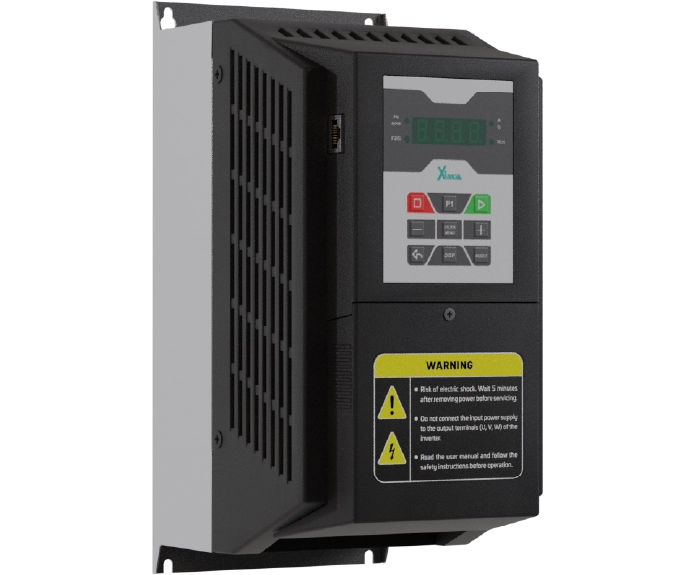
15 kW Three-Phase Elevator and Crane Series Inverter
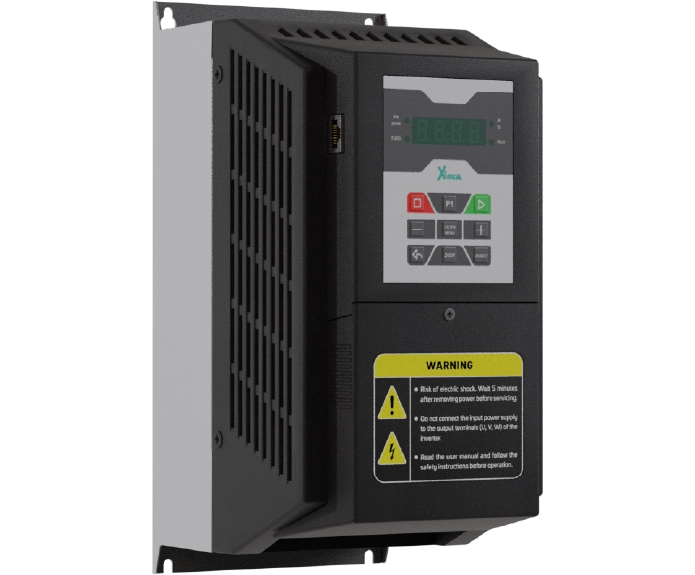
11 kW Three-Phase Crane and Hoist Series Inverter
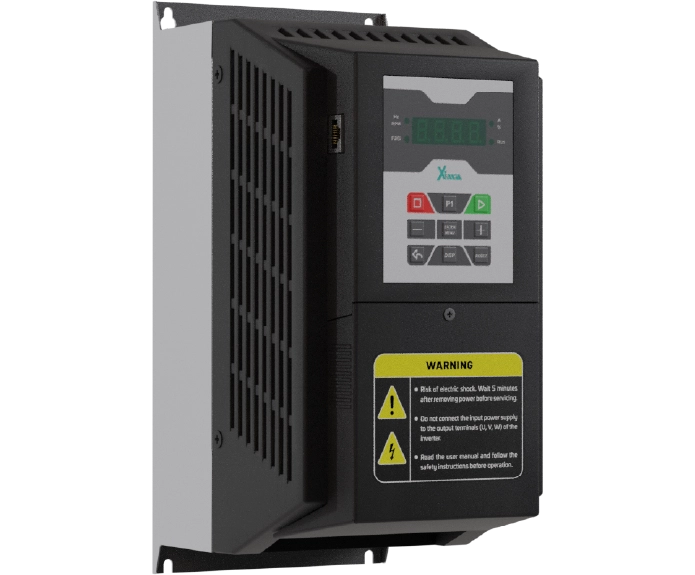
7.5 kW Three-Phase Crane and Hoist Series Inverter
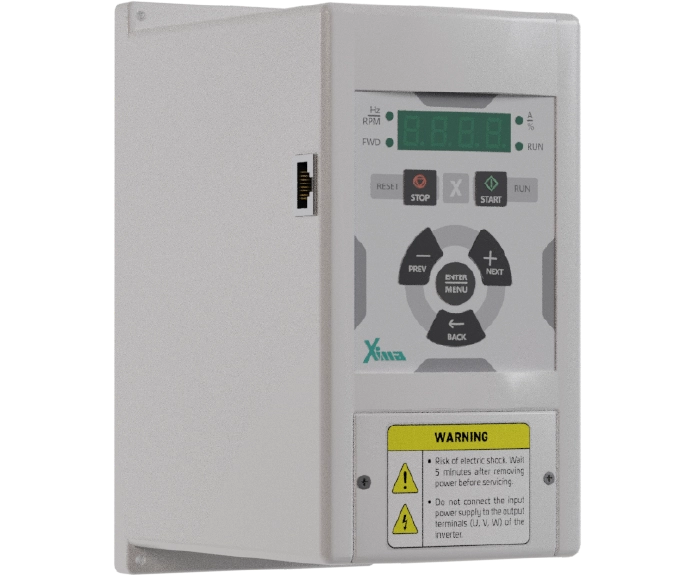
5.5 kW Three-Phase Crane and Hoist Series Inverter
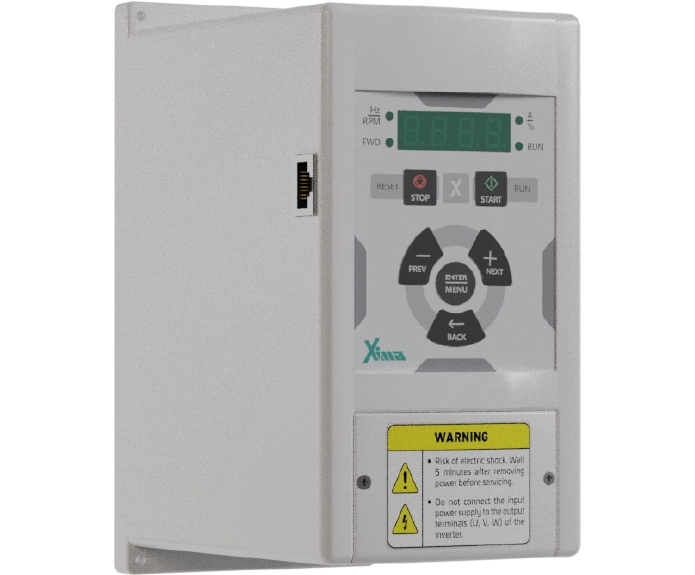
4 kW Three-Phase Crane and Hoist Series Inverter
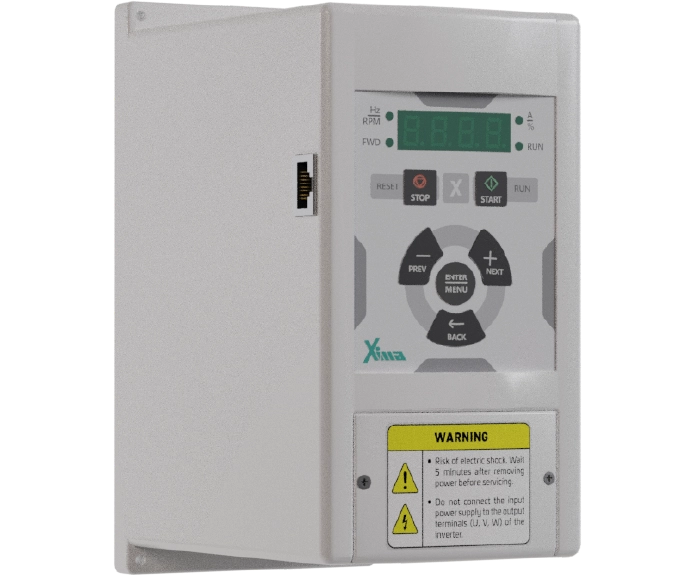
3 kW Three-Phase Crane and Hoist Series Inverter
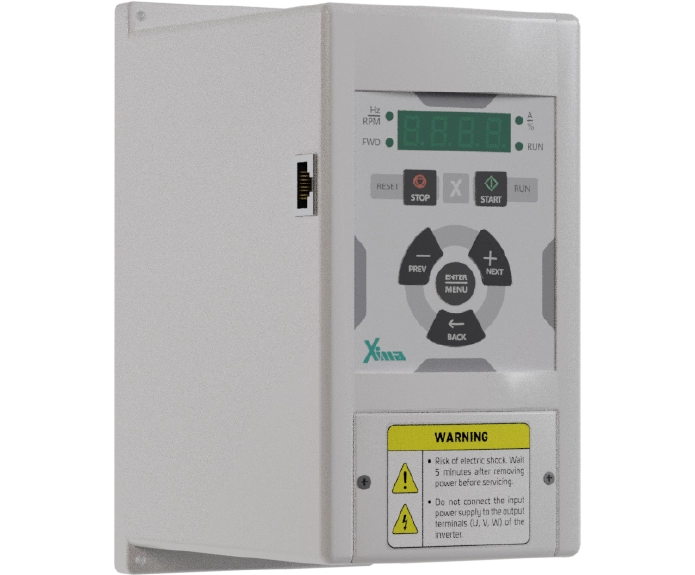
2.2 kW Three-Phase Crane and Hoist Series Inverter
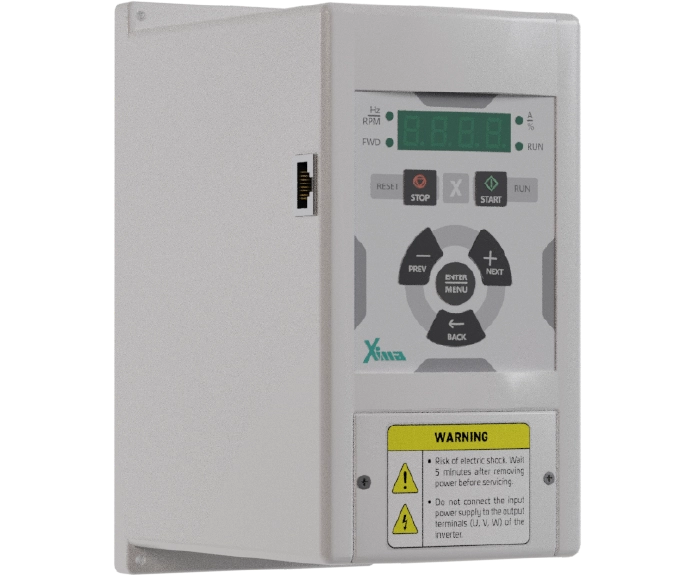
1.5 kW Three-Phase Crane and Hoist Series Inverter
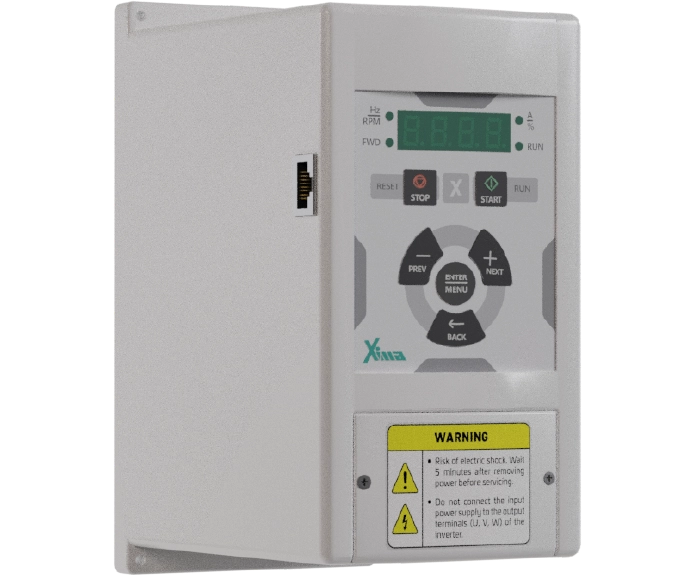
3 kW Single-Phase Elevator & Lift Series Inverter
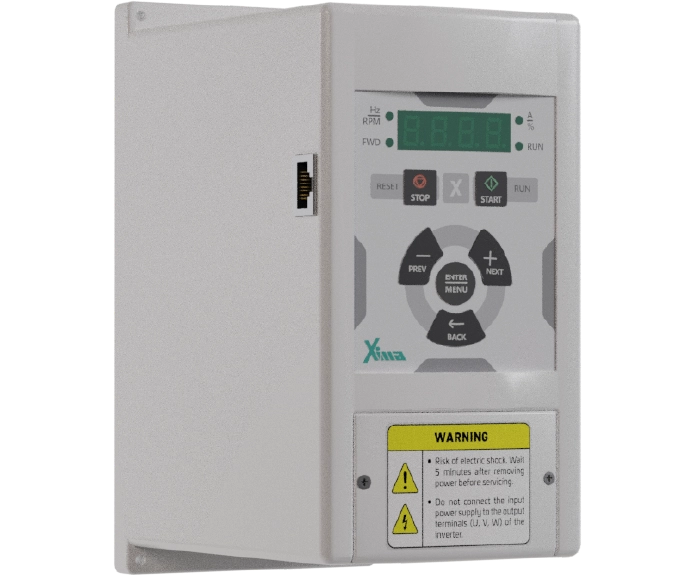
2.2 kW Single-Phase Elevator & Lift Series Inverter
User Comments
Comments
1عالی