Inverter vs Soft Starter: Differences, Cost & Benefits

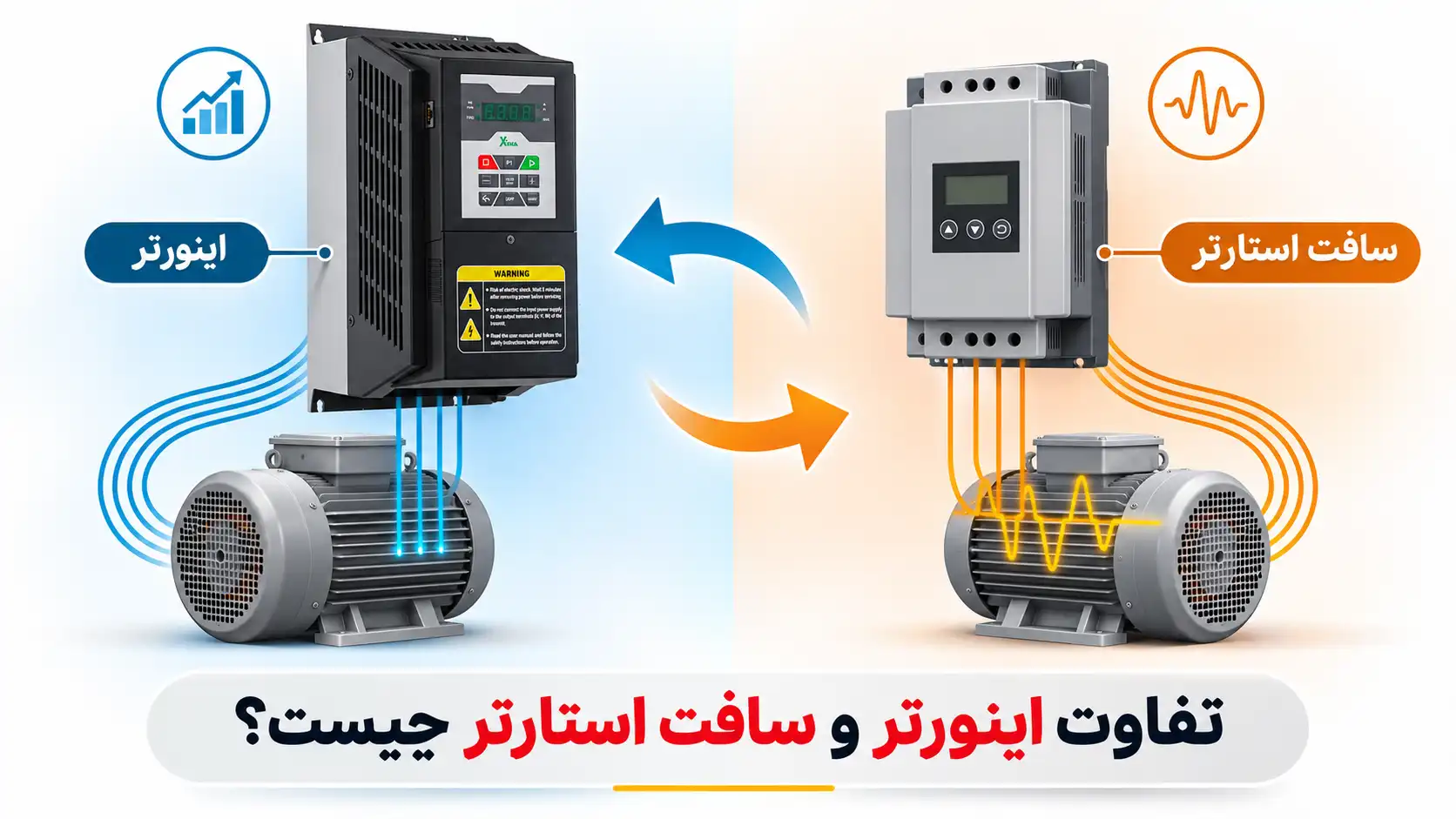
Which Motor Control Solution Is Right for Your Application?
Imagine you are specifying a starter for a 15 kW electric motor on a production line. High starting current, voltage dips and mechanical shock are all concerns. A soft starter could help, but would a variable frequency drive offer better value over the life of the machine?The main difference between a VFD and a soft starter is that a soft starter gradually increases motor voltage during startup, while a variable frequency drive (VFD), also known as an inverter, regulates both voltage and frequency to control motor speed and torque throughout operation. Both can provide smooth acceleration, but they serve different purposes.Choosing the right solution depends on the load, electrical supply, operating hours, required speed range and total cost of ownership—not just the motor’s power rating or the initial purchase price.This guide compares soft starters and VFDs in terms of motor control, starting current, energy consumption, cost and practical industrial applications. If you are already evaluating equipment for a project, browse the XIMA G Series industrial inverter range to compare available power ratings and supply voltages as you work through the selection criteria below.What Is a Soft Starter and How Does It Work?
A soft starter is an electronic motor starting device designed to reduce inrush current and mechanical stress when an AC motor accelerates. It is commonly used with three-phase induction motors that operate at a nearly constant speed after startup.When an induction motor is connected directly to the mains, its starting current can be several times its rated current. This sudden demand may cause supply voltage dips, heating and mechanical stress on belts, couplings, gearboxes and other driven components.A soft starter uses semiconductor devices called silicon-controlled rectifiers (SCRs), or thyristors, to progressively increase the effective voltage applied to the motor. Instead of accelerating abruptly, the motor can start more gradually, provided sufficient torque is available to accelerate the load.Many soft starters incorporate a bypass contactor that carries the motor current once the starting sequence is complete, reducing losses in the semiconductor switching devices.A soft starter is worth considering when:- The motor operates at a fixed speed after starting.
- High inrush current or mechanical shock is the primary concern.
- Continuous speed adjustment is unnecessary.
- A lower initial equipment cost is important.
What Is a VFD and How Is It Different from a Soft Starter?
A variable frequency drive (VFD), often referred to as an AC drive or industrial inverter, controls the speed, acceleration and torque of an electric motor by adjusting its output frequency and voltage.A conventional VFD contains three principal power conversion stages:- Rectifier: converts incoming AC power into DC power.
- DC link: smooths and temporarily stores energy in the intermediate circuit.
- Inverter stage: uses switching devices, typically IGBTs, and pulse-width modulation (PWM) to produce a controlled AC output.
VFD vs Soft Starter: Comparison Table
| Comparison criterion | Soft starter | Variable frequency drive (VFD) |
|---|---|---|
| Smooth motor starting | Yes | Yes |
| Voltage control | Mainly during starting and stopping | Throughout operation |
| Frequency control | No | Yes |
| Continuous motor speed control | No | Yes |
| Starting current reduction | Yes | Yes |
| Torque control | Limited; model-dependent | More extensive; control-mode dependent |
| Soft stopping | Available on equipped models | Yes, subject to load and braking requirements |
| Electrical braking | Limited; model-dependent | Available with suitable drive and equipment |
| Energy savings in variable-speed applications | Limited | Potentially substantial in suitable loads |
| Direction reversal | Requires suitable additional circuitry or features | Available on equipped models |
| PID process control | Not typical | Available on equipped models |
| PLC communication | Model-dependent | Available on many models |
| Commissioning complexity | Generally lower | Generally higher |
| Initial purchase cost | Generally lower | Generally higher |
| Typical application | Fixed-speed motor starting | Variable-speed motor and process control |
Five Technical Differences Between a VFD and a Soft Starter
1. Motor speed control
The synchronous speed of an AC induction motor is determined by supply frequency and the number of motor poles:Ns = (120 × f) / P- Ns = synchronous speed in revolutions per minute (rpm)
- f = supply frequency in hertz (Hz)
- P = number of motor poles
2. Motor starting current
Both devices can reduce the high starting current associated with direct-on-line (DOL) starting. A soft starter does this by controlling the applied voltage and, where available, limiting current. A VFD adjusts voltage, frequency and acceleration together to meet the load’s torque requirements within its current capacity.| Starting method | Illustrative starting current relative to motor rated current |
|---|---|
| Direct-on-line (DOL) | Around 5–8 times |
| Soft starter | Often around 2–4 times |
| VFD | In many suitable applications, around 1–1.5 times on the motor side |
3. Starting torque and low-speed performance
Reducing starting current is useful only if the motor can still generate enough torque to accelerate its load. At a given slip and frequency, induction motor torque is approximately proportional to the square of the applied voltage under simplified conditions.For example, applying 70% of rated voltage results in approximately 49% of the corresponding full-voltage starting torque in this simplified model.A suitably selected VFD can offer better torque management at low speeds, particularly with an appropriate vector control mode. However, the result depends on motor parameters, current limits and the drive’s control capabilities.This is especially important for loaded conveyors, mixers, hoists and other demanding applications. Do not assume that reducing the starting voltage will always allow a heavily loaded motor to accelerate successfully.4. Motor protection and monitoring
Depending on the model, a soft starter can provide motor overload protection, phase-loss detection, thermal monitoring and excessive-start-time protection.VFDs may offer more extensive monitoring and process integration, including output current monitoring, overcurrent and overload protection, DC bus overvoltage and undervoltage detection, temperature monitoring, fault history, speed or frequency indication and PLC communication.These features can help maintenance teams identify faults and reduce unnecessary downtime. Neither a VFD nor a soft starter replaces all required circuit protection, earthing, isolation or machinery safety systems.5. Harmonics, EMC and power quality
Soft starters can introduce current distortion while their thyristors are controlling motor voltage. Once a bypass contactor is active, the thyristor-related contribution generally falls substantially.Conventional VFD rectifiers may generate input current harmonics during operation. PWM output switching can also introduce electromagnetic interference and additional motor insulation stress, particularly with long motor cables.Depending on the installation, line reactors, harmonic mitigation equipment, EMC filters or output filters may be appropriate. Assess supply quality, motor insulation, cable length, earthing and cabinet layout as part of the engineering review.VFD vs Soft Starter: Which Saves More Energy?
A soft starter can limit starting current, but lowering the peak current during startup does not automatically translate into substantial energy savings over the operating cycle. Once a bypassed soft starter has completed the startup sequence, the motor normally runs at mains frequency.A VFD can reduce speed when the process does not require full output. This is particularly valuable for centrifugal pumps and fans where the required flow varies throughout the day.Under ideal affinity-law conditions:- Flow is approximately proportional to rotational speed.
- Head or pressure difference is approximately proportional to the square of speed.
- Required mechanical power is approximately proportional to the cube of speed.
| Relative speed | Approximate relative mechanical power |
|---|---|
| 100% | 100% |
| 90% | 73% |
| 80% | 51% |
| 70% | 34% |
| 60% | 22% |
Cost Comparison: Is a VFD Worth the Higher Initial Price?
A soft starter generally has a lower purchase price than a comparable VFD, largely because it uses a simpler power circuit and provides fewer continuous control functions. But the purchase price is only part of the investment decision.A total cost of ownership (TCO) assessment should include:- Equipment purchase, installation and commissioning costs
- Electrical energy consumption over the operating life
- Maintenance, repairs and spare parts
- Additional components such as filters or braking equipment
- Production downtime and mechanical wear
Worked example: a 15 kW industrial fan
Assume an industrial fan is driven by a 15 kW motor and the measured electrical input power at its present operating point is also 15 kW. It operates for 10 hours a day, 300 days a year.Annual baseline energy consumption is 15 × 10 × 300 = 45,000 kWh.Now assume the process can meet demand at 80% speed throughout those operating hours and the system approximately follows the fan affinity laws. For an illustrative estimate, assume efficiency remains unchanged:Estimated input power = 15 × 0.8³ = 7.68 kW.| Indicator | Fixed-speed operation | VFD scenario (illustrative) |
|---|---|---|
| Electrical input power | 15 kW | 7.68 kW |
| Annual operating hours | 3,000 | 3,000 |
| Annual energy consumption | 45,000 kWh | 23,040 kWh |
| Theoretical annual energy savings | — | 21,960 kWh |
Advantages and Disadvantages of Soft Starters and VFDs
Advantages of soft starters
- Typically lower upfront cost and simpler commissioning.
- Reduced motor inrush current and mechanical stress during acceleration.
- Low running losses with a suitable bypass configuration.
- Practical for many fixed-speed applications.
Limitations of soft starters
- No continuous variable-frequency speed control.
- Reduced starting torque may limit suitability for some heavy loads.
- Limited energy-saving potential during normal fixed-speed operation.
- Starting capacity depends on start duration, duty cycle and starts per hour.
Advantages of VFDs
- Adjustable motor speed, acceleration and deceleration.
- Greater flexibility in torque management and process control.
- Reduced starting current when correctly selected and configured.
- Potential energy savings in suitable variable-demand systems.
- PID and PLC integration on equipped models.
Limitations of VFDs
- Typically higher purchase cost and more involved commissioning.
- Installation and environmental conditions can affect available capacity.
- Harmonics, EMC and motor insulation compatibility must be considered.
- Additional filtering or braking equipment may be necessary.
Which Is Better for Pumps, Fans, Conveyors and Hoists?
The answer depends on how the driven equipment operates and what the process needs from the motor.VFD or soft starter for water pumps and booster systems?
A fixed-speed pump that only needs reduced starting current or smoother acceleration may be a good candidate for a soft starter. Where water demand changes throughout the day, a VFD with pressure feedback and PID control can adjust pump speed to maintain the required pressure.For these applications, compare XIMA P Series pump and booster pump inverters. Selecting a dedicated pump drive starts with motor current, flow and pressure requirements, and the required protection and control functions.For more background, see our water pump inverter selection guide and explanation of PID control in a variable frequency drive.VFD or soft starter for industrial fans and compressors?
For ventilation systems with variable airflow demand, a VFD can be a better fit because it allows fan speed to follow the actual process requirements. A fixed-speed fan with a simple starting-current issue may only need a soft starter.Compressor applications require additional care. The compressor type, approved speed range, lubrication requirements and manufacturer instructions must all be considered. If the compressor is designed for fixed-speed operation, a soft starter may be appropriate. Do not use variable-speed operation outside the equipment manufacturer’s approved conditions.VFD or soft starter for conveyor belts?
A lightly loaded conveyor operating at a fixed speed may only require a soft starter. A VFD becomes more useful when belt speed must be coordinated with other machines, products require different conveying speeds, or the conveyor must accelerate under load.For example, the XIMA G100B055-3 5.5 kW three-phase inverter may be a starting point for evaluating a 380 V conveyor motor of the same power rating. Its current capacity and starting torque performance must match the actual machine requirements.Our conveyor inverter selection guide explains the key criteria for choosing a drive for material handling and production lines.VFD or soft starter for elevators and overhead cranes?
Elevators that require controlled speed, smooth acceleration, accurate stopping and brake coordination need a suitable motion-control system. A conventional soft starter cannot provide the same functionality as a dedicated elevator drive.Cranes and hoists may also require stable low-speed torque, controlled deceleration and regenerative energy management. Mechanical braking, independent safety functions and the complete control system are essential; an inverter alone does not make a lifting system safe.Explore XIMA L Series elevator and hoist drives for application-specific model options. The elevator inverter selection guide and overhead crane drive selection guide provide further information on the technical requirements of these applications.Can a VFD Replace a Soft Starter?
Yes, in many applications. A correctly selected VFD can perform smooth motor starting and provide additional speed and torque control. However, replacing a soft starter is not a simple like-for-like electrical substitution.Before upgrading, check motor current and voltage, load torque, overload requirements, compatibility with PWM output, panel cooling, protection devices, braking requirements and supply conditions. Existing contactor or bypass circuits may need to be redesigned by a qualified engineer.Consult the XIMA drive catalogues and technical documentation for model-specific installation and operating requirements. If the existing motor operates at a fixed speed and its soft starter already meets the process requirements, the upgrade may not be economically justified.How to Choose Between a VFD and a Soft Starter
Use the following table as an initial decision guide, then confirm the final choice with the equipment specifications and operating conditions.| Project requirement | Solution to evaluate |
|---|---|
| Reduced starting current only | Soft starter |
| Continuous speed adjustment | VFD |
| Fixed-speed motor and limited budget | Soft starter |
| Booster pump pressure regulation | Pump VFD with PID control |
| Variable airflow and potential energy savings | VFD |
| High starting torque | Appropriately rated VFD or specialist starter assessment |
| Synchronised production line speeds | VFD |
| Precise elevator motion | Dedicated elevator drive |
| Controlled hoist movement | Dedicated drive with suitable braking and safety systems |
Motor control equipment selection checklist
Before ordering a VFD or soft starter, gather the following information:- Motor nameplate: rated power, current, voltage and frequency.
- Available electrical supply and motor winding connection.
- Load type, starting torque and inertia.
- Required acceleration, deceleration and speed range.
- Starts and stops per hour and daily operating hours.
- Ambient temperature, panel ventilation and installation conditions.
- Supply limitations, sensor feedback and PLC communication needs.
Frequently Asked Questions About VFDs and Soft Starters
What is the main difference between a soft starter and a VFD?
A soft starter controls the motor voltage during startup and, on equipped models, stopping. A VFD controls voltage and frequency throughout operation, enabling continuous motor speed adjustment and more flexible torque management.Which is better, a VFD or a soft starter?
A soft starter is often the more economical choice for a fixed-speed motor that only needs smoother starting. A VFD is generally better suited to applications requiring variable speed, process regulation, torque management or energy optimisation.Can a soft starter control motor speed?
A conventional soft starter is not designed for continuous speed control. Some models offer limited short-duration slow-speed functions, but these do not replace variable frequency drive control.Does a VFD save more energy than a soft starter?
It can in suitable variable-speed applications, particularly centrifugal fans and pumps. For a fixed-speed motor with constant demand, a VFD does not necessarily consume less energy than a bypassed soft starter.Why is a VFD more expensive than a soft starter?
A VFD typically contains a rectifier, DC link, inverter switching stage and more extensive control electronics. These additional components and functions generally increase its initial purchase price.Does a VFD reduce motor starting current?
Yes. A properly sized and configured VFD can limit starting current by controlling acceleration, frequency and voltage. The actual current depends on the motor, driven load, control settings and drive capacity.Is a VFD or soft starter better for a water pump?
A VFD is generally more suitable when variable flow or constant-pressure control is required. For a fixed-speed pump that only needs smoother starting, a soft starter may be sufficient.Can a VFD and a soft starter be used together?
Normally, they should not be connected in series to control the same motor unless the configuration is explicitly approved and engineered for that purpose. They may coexist in separate branches of multi-motor systems or in professionally designed transfer and bypass arrangements.Is a soft starter better for large motors?
Not necessarily. Large fixed-speed motors may be economical to start with a soft starter. If continuous speed adjustment or more demanding torque control is required, a suitably sized VFD may offer better technical and economic value.What is the difference between a soft starter and a star-delta starter?
A star-delta starter initially connects a compatible motor in star and then switches it to delta. A soft starter provides a more adjustable voltage ramp during starting. Neither provides the continuous speed control of a VFD.Final Verdict: Should You Buy a VFD or a Soft Starter?
A soft starter solves a starting problem. A VFD can solve a starting problem and also control the way the motor operates throughout the process.If your equipment operates at a fixed speed and your main concern is inrush current, a soft starter may be all you need. If your application requires speed adjustment, torque management, variable-demand energy savings, pressure control or coordination between machines, a suitable VFD can deliver greater operating flexibility.The right decision begins with your motor nameplate and real load requirements, not just the purchase price or a power rating in kilowatts.Not sure which inverter to specify? Speak with XIMA’s technical and sales team before placing your order. Have your motor nameplate, supply voltage, machine type and operating requirements ready so the team can help assess a suitable model.If you already know the required specifications, browse the complete XIMA drive range, select a model and use the Request Quote option on its product page.Products
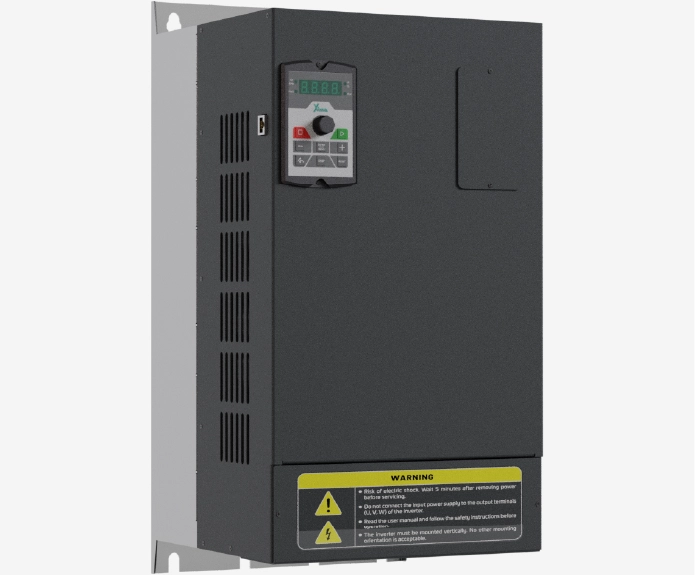
55 kW Three-Phase Industrial Series Inverter
259×510×241
Three-Phase 380 V Input
G300E550-3
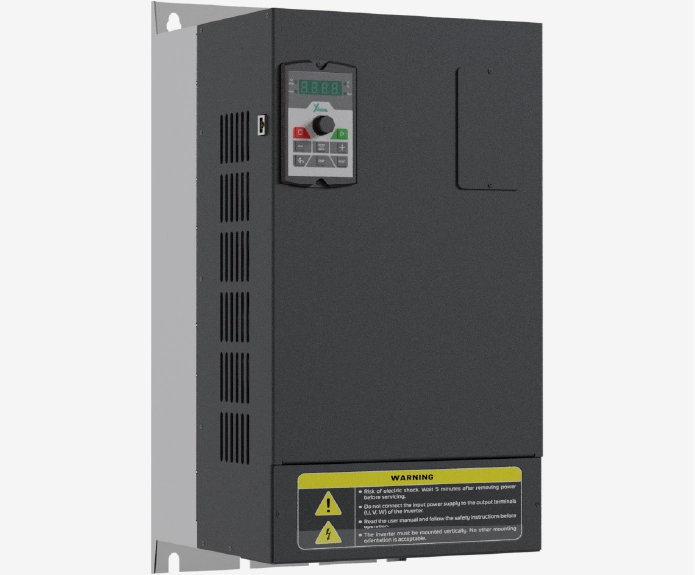
45 kW Three-Phase Industrial Series Inverter
259×510×241
Three-Phase 380 V Input
G300E450-3
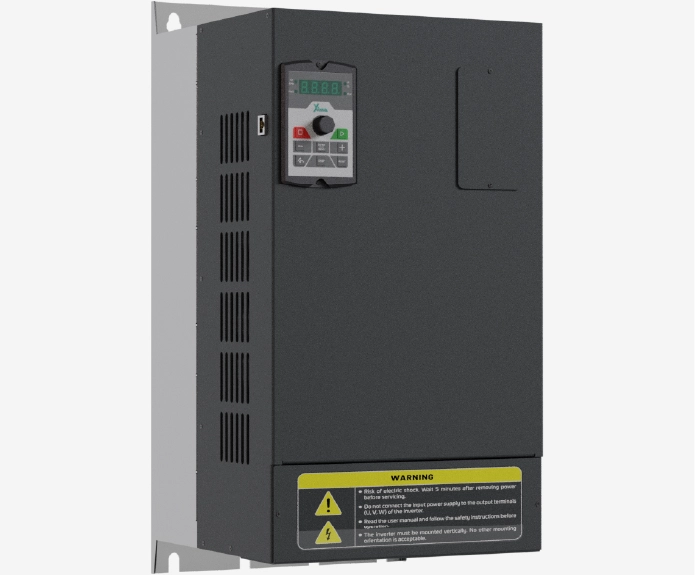
37 kW Three-Phase Industrial Series Inverter
259×510×241
Three-Phase 380 V Input
G300E370-3
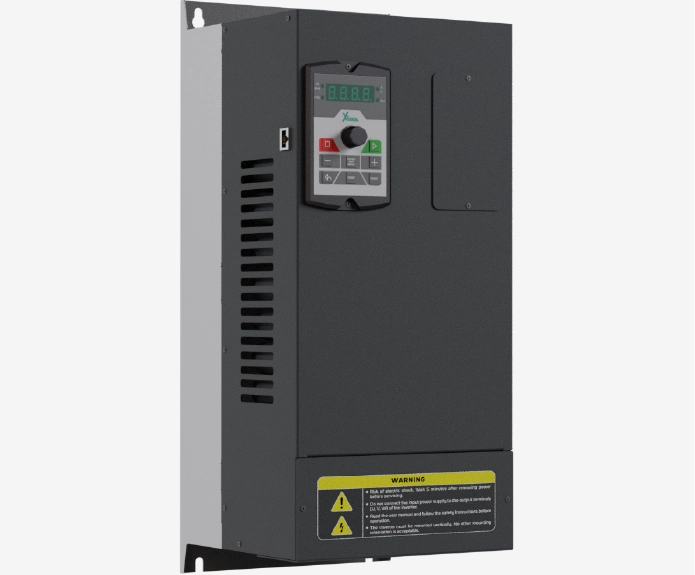
30 kW Three-Phase Industrial Series Inverter
205×448×198
Three-Phase 380 V Input
G300D300-3
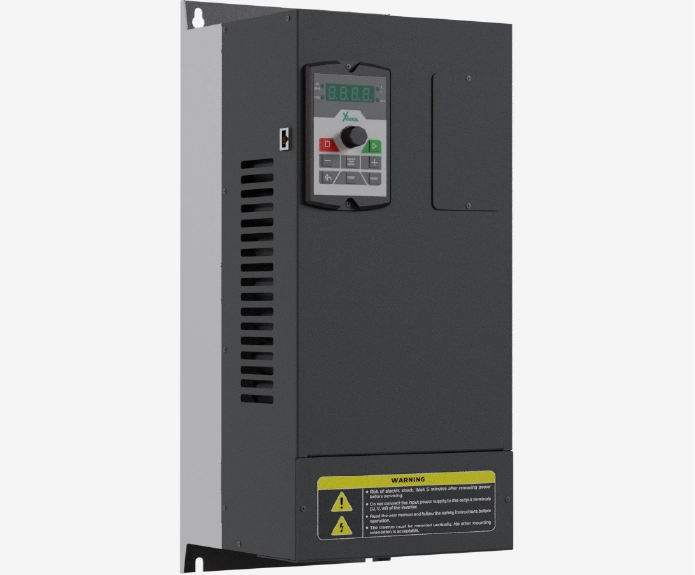
22 kW Three-Phase Industrial Series Inverter
205×448×198
Three-Phase 380 V Input
G300D220-3
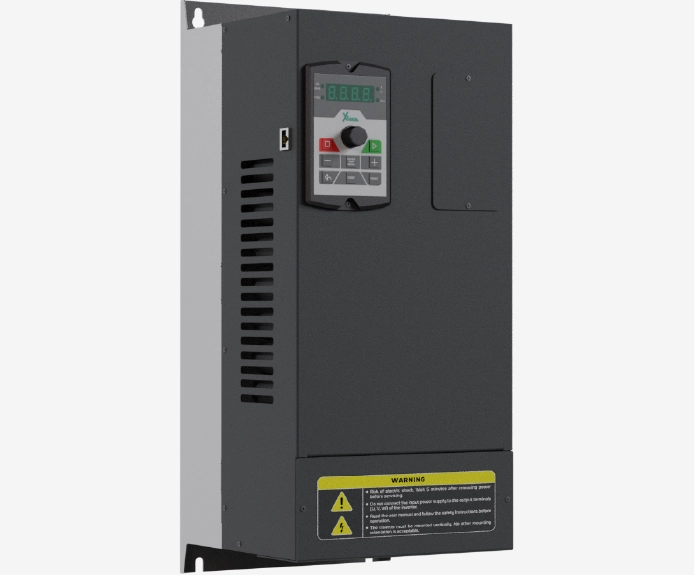
18.5 kW Three-Phase Industrial Series Inverter
205×448×198
Three-Phase 380 V Input
G300D185-3
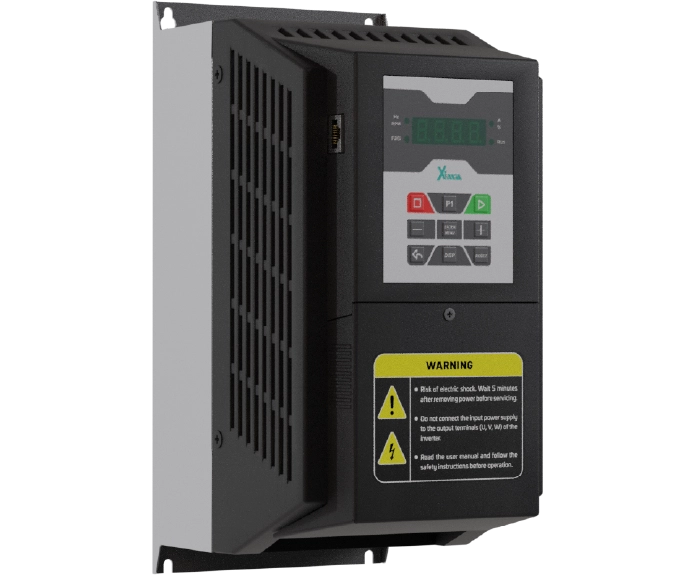
15 kW Three-Phase Industrial Series Inverter
132×285×179
Three-Phase 380 V Input
G200C150-3
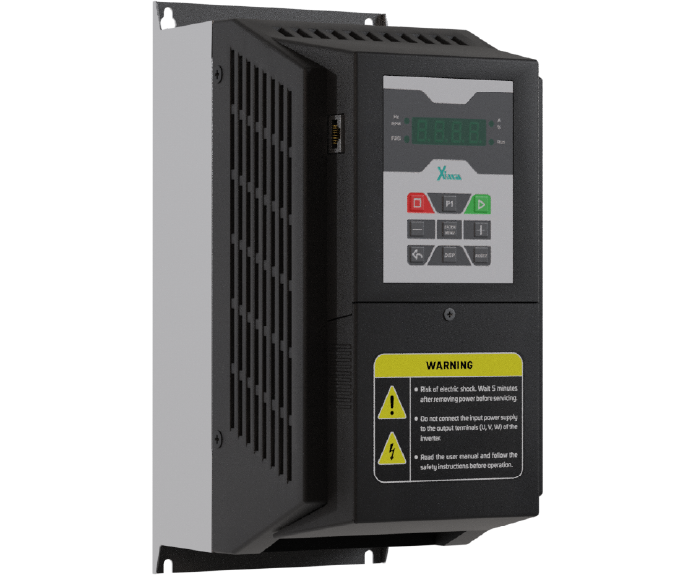
11 kW Three-Phase Industrial Series Inverter
132×285×179
Three-Phase 380 V Input
G200C110-3
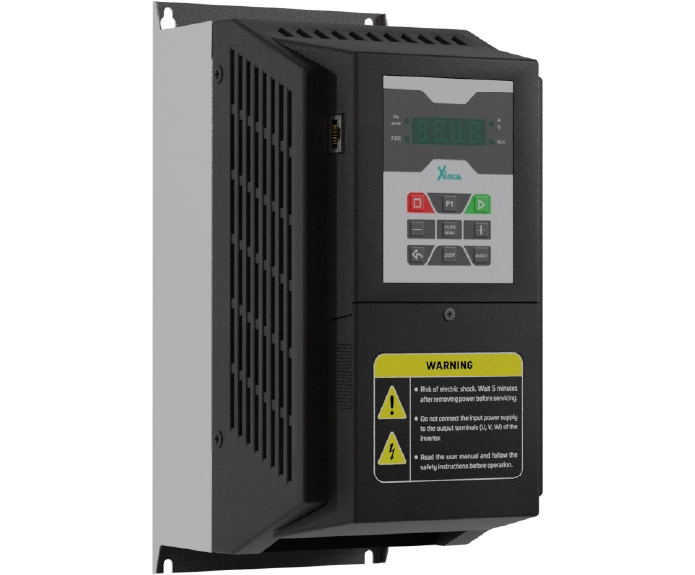
7.5 kW Three-Phase Industrial Series Inverter
132×285×179
Three-Phase 380 V Input
G200C075-3
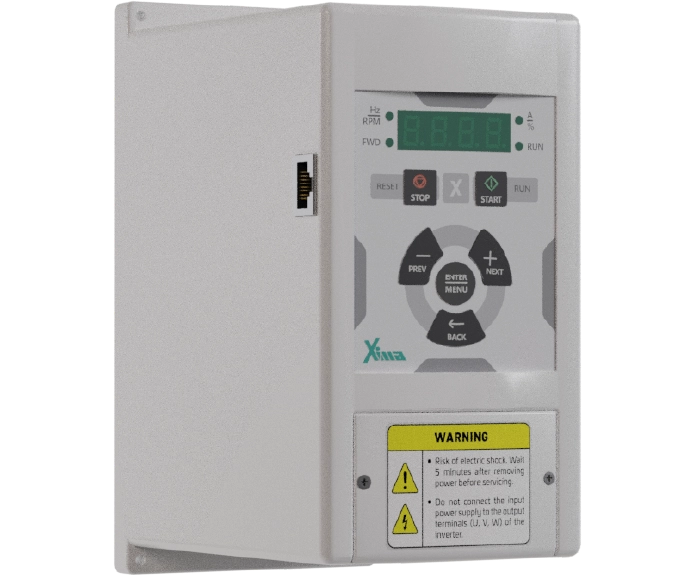
5.5 kW Three-Phase Industrial Series Inverter
103×206×160
Three-Phase 380 V Input
G100B055-3
User Comments
Comments
No comments yet.