Pump Inverter vs. Industrial Inverter: Key Differences and Buying Guide


Pump or Industrial Inverter: Which Is the Smarter Choice for Your Application?
The main difference between a pump inverter and an industrial inverter lies in their intended applications, motor control capabilities, load management, and protection features. Pump inverters are optimised for water pressure regulation, pump speed control, and booster pump management, while industrial inverters are designed to control motor speed and torque across a wide range of machinery and industrial equipment.
If your application requires constant water pressure or efficient water supply management, a pump inverter is generally the more suitable choice. In contrast, industrial inverters offer greater flexibility for conveyors, mixers, industrial fans, and manufacturing equipment.
However, this does not mean that industrial inverters cannot be used in pumping applications. In many cases, a general-purpose industrial drive can successfully control a water pump. The important question is whether it represents the most technically suitable and cost-effective solution.
This guide compares pump and industrial inverters in terms of performance, control features, energy efficiency, installation requirements, and overall cost to help you make an informed purchasing decision.
Pump Inverter vs. Industrial Inverter: Key Differences at a Glance
Both pump and industrial inverters are types of variable frequency drives (VFDs). They regulate electric motor speed by adjusting the frequency and voltage supplied to the motor.
Their primary differences concern the control requirements of the application and the way each drive manages motor operation.
Pump Inverter — XIMA P Series
- Design purpose: Dedicated control of pumping and water supply systems.
- Primary applications: Water pumps and booster pump systems.
- PID control: Advanced process control functions tailored to pumping applications.
- Constant pressure control: A core application.
- Torque control: Adapted to pumping requirements.
- Dry-run detection: Dedicated Dry Mode functionality.
- Multi-pump management: Specialised control software.
- Sleep mode: Advanced pump-specific functionality.
- Overload capacity: Depends on the technical specifications of the selected model.
- Communication: Modbus support.
Industrial Inverter — XIMA G Series
- Design purpose: General-purpose industrial motor control.
- Primary applications: Manufacturing equipment, conveyors, fans, and machinery.
- PID control: Supported.
- Constant pressure control: Possible with suitable feedback devices and configuration.
- Torque control: Adaptable to different industrial loads.
- Dry-run protection: Depends on available functions and the system’s protection design.
- Multi-pump management: May require additional control equipment.
- Sleep functionality: Depends on the selected model and configuration.
- Overload capacity: Rated at 150% for one minute, subject to the applicable technical specifications.
- Communication: Modbus support.
For both drive types, energy consumption depends on operating conditions, while the purchase price varies according to the model, power rating, and available features.
Two inverters with identical power ratings may offer significantly different control capabilities. Therefore, choosing a VFD solely on the basis of motor power or purchase price may lead to unnecessary installation and operating costs.
What Is a Pump Inverter and How Does It Work?
A pump inverter is a specialised variable frequency drive designed to regulate motor speed according to the operating requirements of a pumping system.
Water demand in residential, commercial, and industrial facilities rarely remains constant throughout the day. When demand increases, water pressure may decrease. When demand falls, operating the pump at maximum speed may no longer be necessary.
A pump inverter receives feedback from a pressure sensor and processes this information through a proportional-integral-derivative (PID) controller. The drive then adjusts motor speed to maintain the required system pressure.
When properly designed and configured, this approach can improve pressure stability, reduce unnecessary pump operation, and support more efficient water distribution.
Common Applications of Pump Inverters
Pump-specific inverters are commonly used in:
- Residential and commercial water booster systems.
- Industrial water pumping systems.
- Circulation pumps.
- Heating, ventilation, and air conditioning (HVAC) systems.
- Pressurised irrigation systems.
- Water pumping stations.
- Multi-pump water supply networks.
In applications involving fluctuating water demand, constant pressure control, and coordinated pump operation, dedicated pump and booster pump inverters can simplify system design and reduce the need for additional control equipment.
Key Features of Pump Inverters
Specialised pump drives typically include functions developed specifically for water supply and pumping applications.
For example, the XIMA P Series features dry-run detection, which helps identify configured operating conditions associated with insufficient water supply.
Its advanced Sleep Mode allows the pump to stop when water demand becomes sufficiently low and resume operation when demand returns.
Integrated multi-drive coordination also supports the development of booster pump systems with a unified control architecture.
The main advantages of these functions are improved pump management, reduced control complexity, and potentially lower installation and operating costs.
What Is an Industrial Inverter?
An industrial inverter is a general-purpose variable frequency drive used to regulate the speed, torque, and operating behaviour of electric motors in industrial machinery.
Unlike dedicated pump drives, industrial inverters are developed to accommodate a wider range of mechanical loads and operating conditions.
For example, a conveyor that starts under load has different torque requirements from a centrifugal fan. Industrial drives must therefore provide sufficient flexibility to accommodate different starting conditions, load variations, acceleration profiles, and stopping requirements.
Motor control accuracy, overload capacity, and compatibility with industrial automation systems are particularly important when selecting an industrial VFD.
Common Applications of Industrial Inverters
Industrial variable frequency drives are widely used in:
- Conveyor belts and material handling systems.
- Industrial fans and ventilation equipment.
- Mixers and agitators.
- Packaging machinery.
- Textile equipment.
- Manufacturing and production lines.
- Machinery requiring variable motor speed and torque control.
In conveyor applications, for instance, starting torque and overload capacity can be critical selection criteria, particularly when the equipment must start under mechanical load.
Key Features of Industrial Inverters
Depending on the model and design, industrial drives may include:
- Voltage-to-frequency control (V/f control).
- Sensorless vector control (SVC).
- Automatic motor parameter identification (Auto-Tuning).
- Torque boost functionality.
- PID process control.
- Industrial communication protocols.
- Configurable acceleration and deceleration.
- Motor protection and overload management.
These functions allow engineers to adapt motor performance to the specific requirements of an industrial process.
For applications requiring flexible speed and torque control, evaluating XIMA industrial variable frequency drives is a practical starting point for selecting suitable equipment.
7 Key Technical and Economic Differences Between Pump and Industrial Inverters
Although pump and industrial inverters operate on similar electrical principles, differences in their control functions and intended operating conditions can significantly affect equipment selection and project costs.
1. Load Type and Torque Requirements
Mechanical load characteristics are among the most important factors when selecting a variable frequency drive.
Many centrifugal pumps operate as variable-torque loads. As rotational speed decreases, the required torque also decreases. This characteristic makes variable-speed operation particularly valuable in systems with fluctuating demand.
By contrast, many industrial machines, including conveyors, operate as constant-torque loads. These applications may require substantial torque even at relatively low speeds.
Under such conditions, the ability of the inverter to provide adequate starting torque and withstand temporary overloads becomes especially important.
Industrial inverters generally offer greater flexibility for managing different mechanical load characteristics.
However, not all pumps are variable-torque applications. Positive displacement pumps, for example, may have different torque requirements and must be evaluated accordingly.
The presence of a pump alone is therefore not sufficient to determine which type of inverter should be selected.
2. Motor and Process Control Methods
A common misconception is that only pump inverters can regulate water pressure.
In reality, many industrial inverters also feature integrated PID controllers and can regulate pressure when used with compatible sensors and appropriate parameter settings.
A PID controller compares a measured process variable with a predefined setpoint and generates a corrective command.
For example, if the target water pressure is 4 bar, the drive can use pressure sensor feedback to adjust motor speed and bring the system pressure closer to the desired value.
The defining advantage of a dedicated pump inverter is not simply the presence of PID control, but the availability of additional functions specifically designed for pumping applications.
Industrial inverters, meanwhile, may use sensorless vector control to improve motor speed and torque regulation.
It is important to distinguish between these two control methods:
- PID control regulates a process variable such as pressure, temperature, or flow.
- Vector control manages motor behaviour, particularly torque and speed.
These technologies are complementary rather than mutually exclusive.
3. Protection Features and Dry-Run Detection
Both pump and industrial inverters typically incorporate electrical protection functions for conditions such as:
- Overcurrent.
- Motor overload.
- Overvoltage and undervoltage.
- Excessive operating temperature.
- Other electrical faults, depending on the model.
Pumping systems, however, may require additional protection against hydraulic operating conditions.
Dry running is one example. If the water supply is interrupted or the source water level becomes insufficient, certain pumps may suffer damage to their mechanical seals and other components.
A pump inverter equipped with dry-run detection can identify conditions associated with insufficient water supply according to its configured detection method.
Achieving equivalent functionality with a general-purpose industrial inverter may require external sensors, additional protective devices, or separate control logic.
The cost of implementing these protections should therefore be considered when comparing drive prices.
Built-in inverter protection functions do not eliminate the need for appropriate electrical and mechanical system protection.
4. Booster Pump and Multi-Pump Management
Multi-pump coordination represents one of the most significant practical differences between dedicated pump drives and general-purpose industrial drives.
In a booster pump system, multiple pumps operate together to provide the required flow and pressure. Effective control involves more than simply adjusting the speed of an individual motor.
The system must also determine when additional pumps should enter or leave operation as water demand changes.
The XIMA P Series supports Master/Slave communication and, with the appropriate control architecture and optional relay expansion card, can manage up to five variable-speed pumps and eleven fixed-speed pumps.
Implementing comparable functionality with a general-purpose industrial VFD may require an external programmable logic controller (PLC), additional hardware, and customised control programming.
For large building services projects and water pumping stations, these differences can affect:
- Control panel design costs.
- Installation complexity.
- Commissioning time.
- System integration requirements.
- Long-term maintenance.
Nevertheless, stable water pressure also depends on correct pump sizing, pressure sensor placement, hydraulic design, and properly configured control parameters.
5. Installation and Commissioning Requirements
The fundamental electrical installation principles are similar for both inverter types. However, their commissioning parameters and control priorities often differ.
Typical commissioning parameters for pump inverters include:
- Target water pressure.
- Pressure sensor type and measurement range.
- PID controller settings.
- Sleep Mode activation conditions.
- Dry-run detection settings.
- Auxiliary pump management.
Typical commissioning parameters for industrial inverters include:
- Starting torque requirements.
- Motor control method.
- Acceleration and deceleration times.
- Overload conditions.
- Mechanical load characteristics.
- Communication with automation systems.
Using a dedicated pump inverter may reduce the amount of external control programming required for water supply applications.
Industrial inverters, in contrast, provide flexible configuration options for different types of machinery.
Both drive types should be installed and commissioned by qualified professionals in accordance with the manufacturer’s documentation, motor specifications, and actual operating conditions.
6. Energy Efficiency and Power Consumption
Does a pump inverter consume less electricity than an industrial inverter?
Not necessarily.
Actual energy consumption depends primarily on the mechanical load, motor speed, equipment efficiency, system characteristics, and operating conditions.
Both types of variable frequency drives can improve energy efficiency by adjusting motor speed according to process demand.
However, dedicated pump functions such as Sleep Mode and multi-pump coordination may provide additional energy management benefits in systems with variable water consumption.
The Relationship Between Pump Speed and Power
According to the pump affinity laws, under ideal conditions and at corresponding operating points, the mechanical power required by a centrifugal pump is approximately proportional to the cube of its rotational speed.
The theoretical relationship can be illustrated as follows:
- 100% pump speed: 100% relative mechanical power.
- 90% pump speed: Approximately 72.9% relative mechanical power.
- 80% pump speed: Approximately 51.2% relative mechanical power.
- 70% pump speed: Approximately 34.3% relative mechanical power.
These figures illustrate why variable-speed pumping can offer significant energy-saving opportunities.
However, they represent theoretical mechanical power requirements rather than guaranteed reductions in electrical energy consumption.
Actual savings depend on static head, the system curve, pump and motor efficiency, drive losses, and the pressure required by the water distribution network.
A reliable energy-saving estimate must therefore consider the actual operating characteristics of the pumping system.
7. Purchase Price and Total Cost of Ownership
Which is more expensive: a pump inverter or an industrial inverter?
There is no universal answer.
The purchase price depends on factors such as power rating, rated output current, input voltage, overload capacity, control functions, and model specifications.
Rather than comparing the initial purchase price alone, buyers should evaluate the total cost of ownership (TCO).
This includes:
- Initial inverter purchase price.
- Additional sensors and control equipment.
- Control panel design and assembly.
- Installation and commissioning.
- Energy consumption.
- Maintenance and repair costs.
- Technical support and spare parts availability.
Consider a multi-pump booster system in which a lower-priced industrial inverter requires an additional PLC, expansion modules, and customised programming.
Although the drive itself may initially cost less, the total implementation cost could exceed that of a dedicated pump inverter.
Conversely, a compatible industrial drive may represent a cost-effective solution for a simple pumping application with limited control requirements.
The best purchasing decision should therefore be based on the total cost of delivering the required functionality rather than the price of the inverter alone.
Can an Industrial Inverter Be Used for a Water Pump?
Yes. An industrial inverter can control a water pump, provided that its electrical specifications are compatible with the motor and its control and protection functions meet the pumping system’s requirements.
For example, the XIMA G Series includes PID control functionality, allowing constant pressure regulation when used with a compatible pressure sensor and properly configured parameters.
An industrial inverter may be suitable for a pumping application when:
- The system consists of a single pump with relatively simple control requirements.
- The inverter’s voltage and rated output current are compatible with the motor.
- All required pump protection functions can be implemented.
- Advanced multi-pump coordination is unnecessary or handled by an external controller.
- The drive is appropriate for the mechanical load and operating conditions.
However, a dedicated pump inverter generally offers a more integrated solution for applications involving multiple pumps, fluctuating water demand, automatic pump coordination, and dry-run detection.
Using an industrial inverter for a water pump is not inherently incorrect. The key consideration is whether it can fulfil the complete system requirements at an acceptable cost and level of complexity.
Pump or Industrial Inverter: How to Choose the Right Drive
The most effective way to select a variable frequency drive is to identify the equipment being controlled and define the primary control objective.
Use the following application-based recommendations as an initial selection guide:
- Building water booster systems: Dedicated pump inverter.
- Multi-pump water supply networks: Dedicated pump inverter.
- Single water pumps with basic control requirements: Either type, subject to technical compatibility.
- Circulation pumps: Suitable pump or industrial inverter.
- Conveyor systems: Industrial inverter.
- Industrial fans: Industrial inverter suitable for the load.
- Mixers and agitators: Industrial inverter.
- Positive displacement pumps: Specialist evaluation of torque requirements and drive capacity.
- Manufacturing machinery: Industrial inverter suited to the operating conditions.
The final decision must always account for motor specifications, mechanical load characteristics, and system control requirements.
Application Example 1: Residential Booster Pump System
A multi-pump booster system in a residential building requires stable water pressure, coordinated operation of auxiliary pumps, and efficient management of fluctuating demand.
In this application, the dedicated functions available in the XIMA P Series may reduce control system complexity and simplify commissioning.
Application Example 2: Factory Conveyor System
A conveyor system may require high starting torque, controlled acceleration, and sufficient overload capacity, particularly when starting under load.
A correctly sized XIMA G Series industrial inverter is generally more appropriate for these requirements than a drive primarily developed for pumping applications.
Application Example 3: Industrial Pump With External PLC Control
In an industrial facility where pressure regulation, pump protection, and operating commands are already managed by a PLC, a compatible industrial inverter may be a practical solution.
This example demonstrates that the installation environment alone does not determine the most suitable drive.
The control architecture and actual process requirements are more important than whether the equipment is installed in a building, pumping station, or factory.
Comparing XIMA P Series Pump Drives and G Series Industrial Drives
XIMA has developed dedicated pump and general-purpose industrial drive families to address different motor control requirements.
This product segmentation allows engineers, equipment manufacturers, and contractors to evaluate drives according to their specific applications rather than relying on a single general-purpose solution.
XIMA P Series: Dedicated Pump and Booster Pump Drives
The XIMA P Series is designed primarily for water supply systems, pump control, and booster pump applications.
Its listed specifications and features include:
- Power range: 0.37–15 kW.
- Product families: P100 and P200.
- Input voltage: Single-phase 220 V or three-phase 380 V, depending on the model.
- Primary control functions: Water pressure regulation and pump speed management.
- Dedicated features: Dry Mode, advanced Sleep Mode, and multi-drive coordination.
- Typical users: Booster pump manufacturers, building services contractors, and water system designers.
The P Series is particularly relevant to projects in which dedicated pumping functions can simplify the overall control architecture.
XIMA G Series: General-Purpose Industrial Drives
The XIMA G Series is designed for a broad range of industrial motor control applications.
Its listed specifications and features include:
- Power range: 0.37–55 kW.
- Product families: G100, G200, and G300.
- Input voltage: Single-phase 220 V or three-phase 380 V, depending on the model.
- Primary control functions: Motor speed and torque regulation.
- Dedicated features: Sensorless vector control, Auto-Tuning, and torque boost.
- Typical users: Machine manufacturers, control panel builders, industrial facilities, and automation engineers.
The G Series offers flexibility for applications with varying mechanical loads and motor control requirements.
Comparing Two 15 kW XIMA Inverter Models
A comparison between two actual 15 kW XIMA drives illustrates why identical electrical ratings do not necessarily indicate identical control capabilities.
XIMA P200C150-3 — Pump Inverter
- Rated power: 15 kW.
- Input voltage: Three-phase 380 V.
- Dimensions: 132 × 285 × 179 mm.
- Intended application: Pump and booster pump systems.
- Distinguishing features: Dedicated pressure regulation and pumping functions.
XIMA G200C150-3 — Industrial Inverter
- Rated power: 15 kW.
- Input voltage: Three-phase 380 V.
- Dimensions: 132 × 285 × 179 mm.
- Intended application: Industrial machinery.
- Distinguishing features: Flexible motor control and industrial load management.
Despite having identical rated power, input voltage, and listed dimensions, these two models are developed for different application requirements.
The P200C150-3 is a suitable model to evaluate for a 15 kW pumping application requiring dedicated pressure control.
The G200C150-3 is a model to consider for industrial machinery requiring appropriate speed regulation, starting torque, and load management.
However, identical power ratings do not guarantee motor compatibility. Rated current, overload requirements, environmental conditions, and the manufacturer’s full technical specifications must be checked before ordering.
What Should You Check Before Buying a Pump or Industrial Inverter?
One of the most common mistakes when purchasing a variable frequency drive is selecting a model solely on the basis of motor power or the lowest available price.
A properly selected inverter must meet both the electrical requirements of the motor and the mechanical and control requirements of the application.
Before purchasing, prepare the following information:
- Motor rated power in kilowatts.
- Rated motor current shown on the nameplate.
- Rated motor voltage and winding connection.
- Available single-phase or three-phase power supply.
- Mechanical load characteristics.
- Starting torque and overload requirements.
- Number of motors or pumps in the system.
- Required flow and pressure for pumping applications.
- Ambient temperature and installation conditions.
- Control panel ventilation requirements.
- Required communication and protection functions.
Important Consideration for Single-Phase Power Supplies
A single-phase input inverter does not necessarily provide a single-phase output.
Single-phase input models in the XIMA P and G Series provide a three-phase 220 V output. They should not be selected for conventional single-phase capacitor-operated pump motors without confirming motor compatibility.
In addition to electrical specifications, buyers should consider warranty conditions, technical documentation, commissioning assistance, and after-sales support when evaluating the long-term value of a drive.
These factors can significantly influence maintenance requirements and the overall reliability of an industrial or pumping system.
Conclusion: Which Inverter Offers Better Value?
The choice between a pump inverter and an industrial inverter depends on the actual requirements of the application.
For constant pressure regulation, booster pump management, and coordinated multi-pump operation, the XIMA P Series generally provides a more specialised solution.
For industrial machinery, variable motor speed, torque regulation, and diverse mechanical loads, the XIMA G Series offers greater flexibility.
In simpler applications, both drive types may be technically suitable. The most cost-effective option can be identified by comparing control capabilities, additional equipment requirements, installation complexity, and long-term operating costs.
The best inverter is not necessarily the most expensive or feature-rich model. It is the drive that meets your application’s requirements without unnecessary cost or complexity.
If you are evaluating a pump or industrial drive for your next project, obtaining technical consultation and inverter pricing before purchasing can help you avoid unnecessary expenses and identify a model that meets your motor specifications and operating requirements.
Frequently Asked Questions
Are Pump Inverters and Industrial Inverters Different in Terms of Hardware?
It depends on the manufacturer and model. In some cases, the primary differences are related to firmware and control functions. In others, hardware design, thermal management, rated output current, and overload capacity may also differ.
Can a Pump Inverter Be Used for Industrial Machinery?
It may be possible if the electrical specifications and control capabilities are compatible with the equipment. However, an industrial inverter is generally a more appropriate option for machinery requiring high starting torque, demanding overload performance, or flexible motor control.
Is a Pump Inverter More Expensive Than an Industrial Inverter?
Not necessarily. Pricing depends on the model, power rating, rated current, and available features. Additional equipment and commissioning costs should also be considered when comparing the overall value of the two drive types.
Does Every Pump in a Booster System Require a Separate Inverter?
No. The number of drives required depends on the system’s control architecture. Some booster systems use individual variable frequency drives for each pump, while others combine fixed-speed and variable-speed pumps.
Can Pump and Industrial Inverters Be Used Interchangeably?
In certain applications, yes. However, compatibility must be confirmed by evaluating voltage, rated current, overload capacity, control inputs and outputs, protection features, and process requirements. Identical rated power alone is insufficient to establish interchangeability.
Products
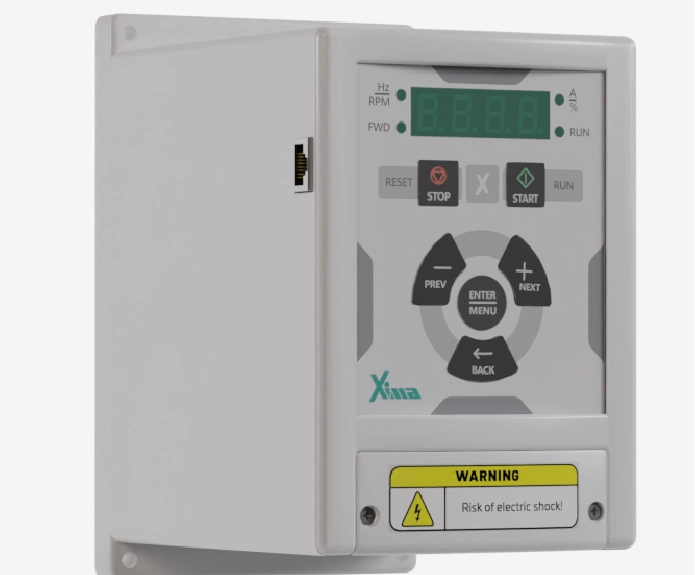
0.37 kW Single-Phase Pump Series Inverter
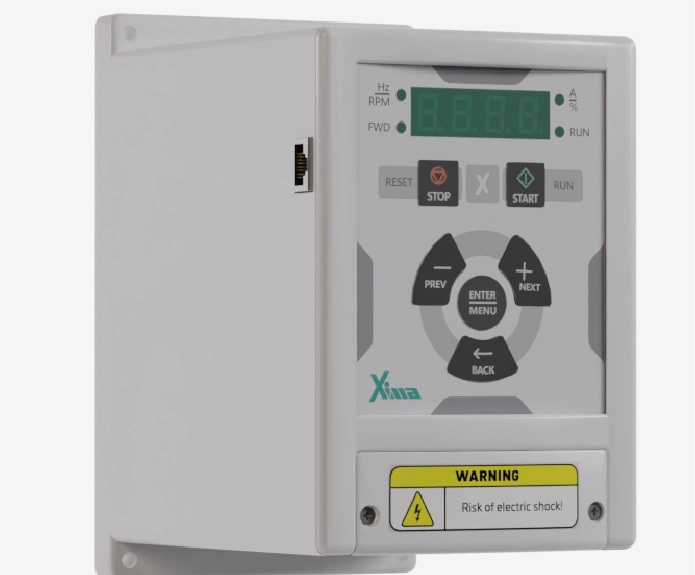
0.37 kW Single-Phase Industrial Series Inverter
0.75 kW Single-Phase Pump Series Inverter
0.75 kW Single-Phase Industrial Series Inverter
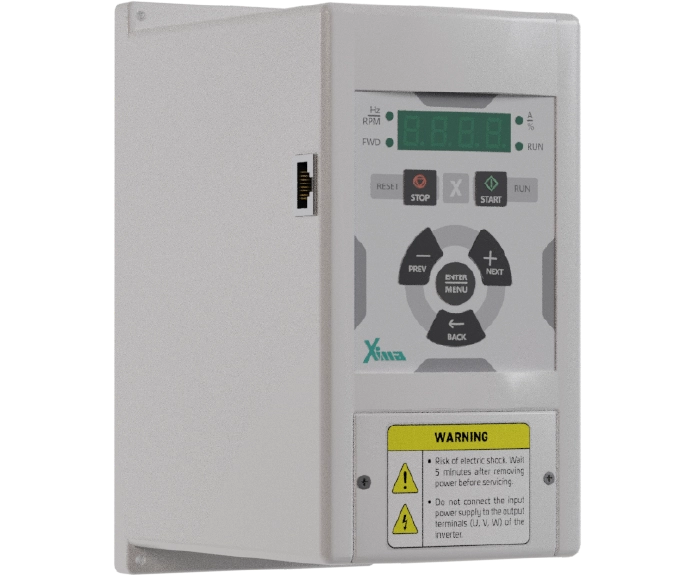
0.75 kW Three-Phase Pump and Booster Pump Series Inverter
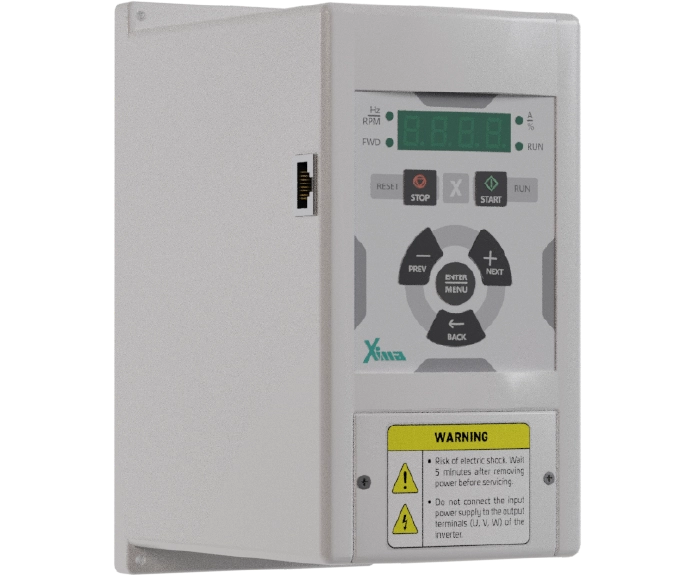
0.75 kW Three-Phase Industrial Series Inverter
1.1 kW Single-Phase Pump Series Inverter
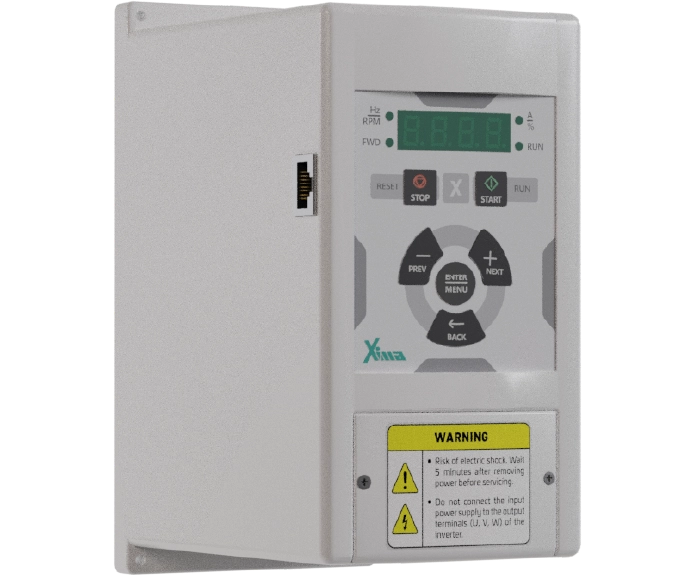
2.2 kW Single-Phase Industrial Series Inverter
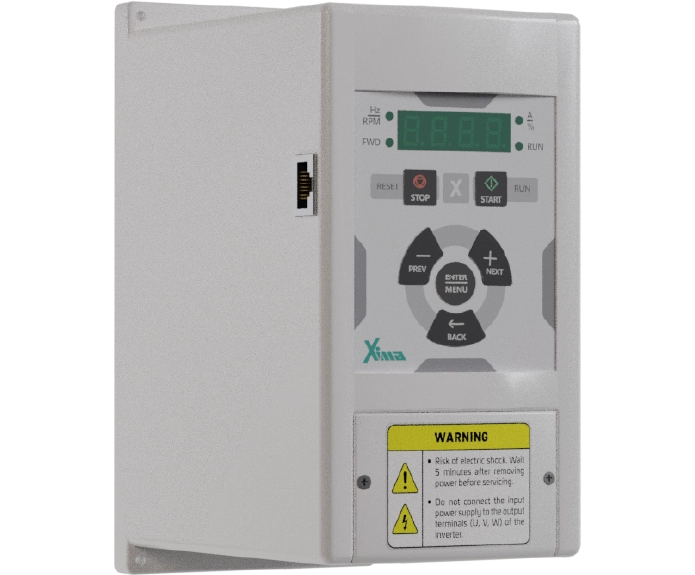
2.2 kW Three-Phase Pump and Booster Pump Series Inverter
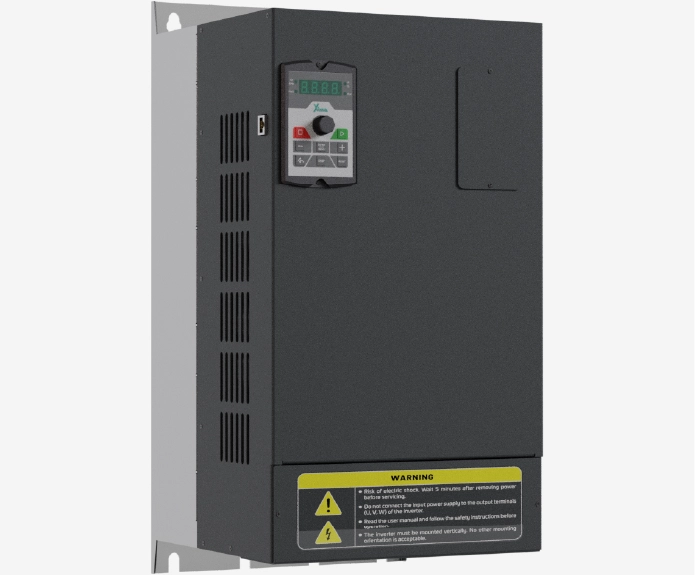
55 kW Three-Phase Industrial Series Inverter
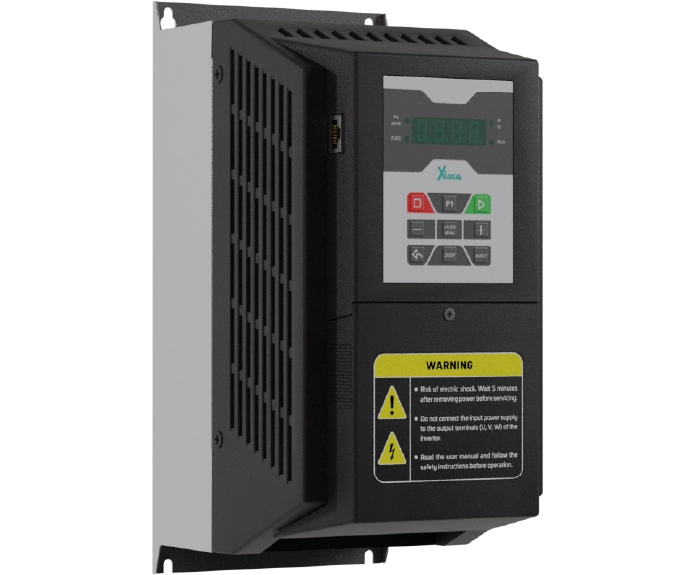
7.5 kW Three-Phase Pump and Booster Pump Series Inverter
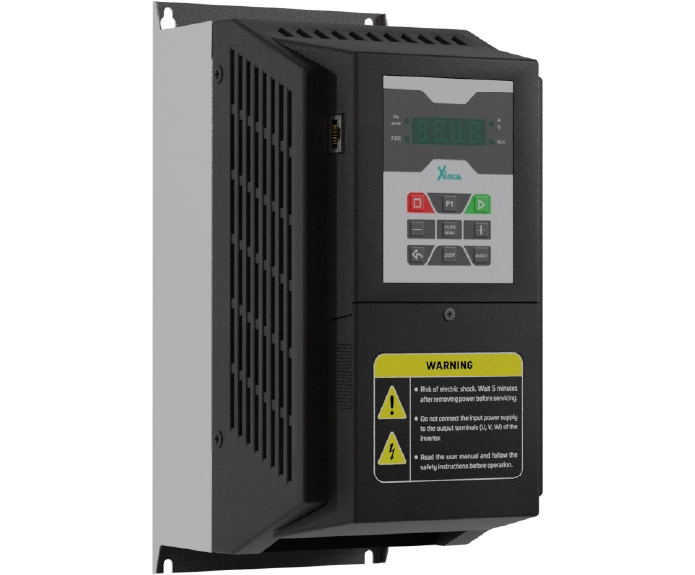
7.5 kW Three-Phase Industrial Series Inverter
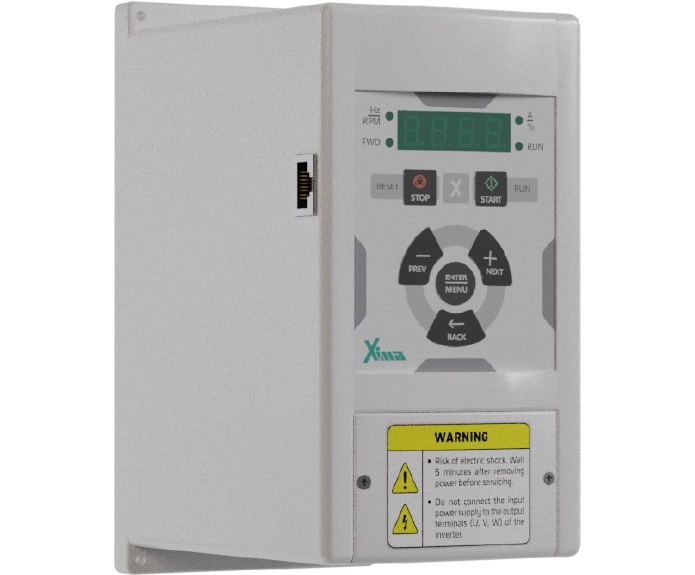
User Comments
Comments
No comments yet.